
Physiotherapy Treatment Techniques: What They Do & When They’re Used
Physiotherapy is not a single treatment. People often picture either a hands-on massage or a set of exercises, but the reality is broader and more considered than that. A physiotherapist draws on a range of techniques, and the ones chosen for any given person depend on what the assessment reveals: the symptoms, the underlying condition, how movement is affected, relevant medical history, and what the person wants to get back to doing.
That last point matters. Two people with knee pain can leave with very different plans because their causes, activity levels, and goals differ. Here’s a clear look at the main techniques physiotherapy can involve, what each is meant to do, and when it might be used.
1. Manual Therapy and Soft Tissue Techniques
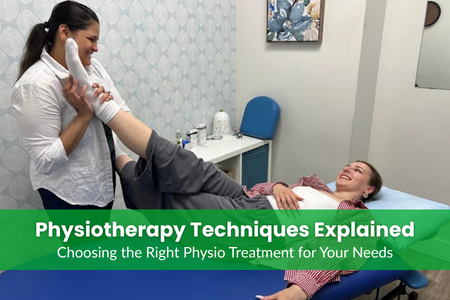
Manual therapy is skilled hands-on treatment. It includes joint mobilizations, which are gentle, controlled movements applied to a stiff or restricted joint, along with soft tissue work directed at muscles and surrounding tissue.
These techniques can help reduce pain, improve range of motion, and ease muscle tension that may be limiting how freely you move. A physiotherapist might use them when a joint feels stiff, when muscles are guarded and tight, or when hands-on work is likely to make active exercise more comfortable and productive. Most people find it relieving, though mild tenderness afterward is normal, especially when tissues have been sensitive for a while.
2. Active Release Techniques (ART)
ART is a specific soft tissue approach that combines targeted pressure with active movement. It may be considered when adhesions or repetitive strain appear to be restricting a muscle. Suitability is not universal, and whether it fits depends on the assessment findings.
3. Therapeutic Exercise and Active Rehabilitation
If hands-on treatment helps set the stage, exercise is often where lasting progress happens. Therapeutic exercise is not a generic sheet of stretches. It is a structured, progressive program built around your specific limitations, whether that means restoring strength after an injury, rebuilding stability in a joint, improving mobility, or retraining movement patterns that contribute to pain.
Here’s why it carries so much weight. Hands-on and other treatments can ease symptoms and address movement restrictions, but developing genuine strength and physical capacity usually takes active work over time. Strengthening the tissues around a problem area, improving how you move, and gradually loading the body can all help reduce the chance of a problem returning. Exercise also rebuilds something harder to measure: confidence in a body that may have felt unreliable since an injury.
A good program changes as you do. What you work on in week six should look different from week one.
4. Shockwave Therapy
Shockwave therapy delivers acoustic pulses to a targeted area. It may be considered for certain persistent tendon-related conditions that haven’t responded well to other approaches. It is not a cure-all, and it tends to work best alongside exercise and other treatment rather than on its own.
5. Acupuncture
Acupuncture involves inserting very fine needles into specific points on the body. Within physiotherapy or broader rehabilitation care, it may be incorporated to help manage certain types of pain or muscle tension when appropriate. As with any technique, whether it suits you depends on your assessment and overall treatment plan, and it is generally used as one part of that plan rather than on its own.
6. Spinal Decompression Therapy
Spinal decompression therapy uses controlled, gentle traction to create space and reduce pressure in the spine. It may be considered for certain conditions involving the neck or lower back, sometimes when symptoms relate to spinal discs or nerve irritation. Suitability depends on individual assessment, and it is best understood as one option within a broader rehabilitation approach rather than a standalone fix.
7. Kinesio Taping
Kinesio taping applies flexible tape to the skin to provide support or gentle feedback to a joint or muscle. It is often used to help you keep moving comfortably while other treatment continues, and it is generally a supportive addition rather than a treatment on its own.
8. Electrotherapy
Electrotherapy, such as TENS, uses mild electrical stimulation applied through pads on the skin. It may be used to help manage pain in some situations, typically as a short-term aid alongside more active treatment.
9. Therapeutic Ultrasound
Therapeutic ultrasound uses sound waves to deliver energy into tissue. It is sometimes used for certain soft tissue conditions. Its role varies from case to case, so it is applied selectively rather than as a routine part of every plan.
How Your Physiotherapist Chooses the Right Treatment?
You won’t automatically receive every technique on this list. Treatment selection comes from clinical reasoning: a physiotherapist assesses how you move, what reproduces your symptoms, your medical history, and your goals, then chooses the approaches most likely to help. A technique that suits one person may be irrelevant for another.
At Waterfront Physio & Rehab, our licensed therapists build treatment around what the assessment actually shows, combining approaches when doing so genuinely serves your recovery. The plan also evolves, shifting from early symptom relief toward strength, function, and getting back to the activities that matter to you.
Getting the Right Assessment Is the First Step
If you’re dealing with pain, stiffness, a nagging injury, or movement that isn’t what it used to be, the most useful first step is finding out what’s actually going on. Guessing, resting indefinitely, or working through random exercises online often prolongs a problem or misses its real cause.
A proper assessment gives you clarity: what’s happening, what can help, and a plan built around your goals rather than a generic template. Serving Etobicoke and the surrounding GTA since 2021, Waterfront Physio & Rehab has earned 350+ five-star reviews by helping patients understand their condition, find the right treatment, and move forward with confidence.
Call us at 416-252-4855 or book online to arrange your assessment and take the first real step toward getting back to what you enjoy.