Manual therapy is a hands-on approach to physiotherapy in which a physiotherapist uses their hands to move your joints, muscles and soft tissues. It's often used to help ease pain and stiffness, improve how a joint or muscle moves, and support recovery from injury. Techniques are chosen based on your symptoms and how your body is moving, so treatment is tailored to you rather than one-size-fits-all.
Techniques Of Manual Therapy
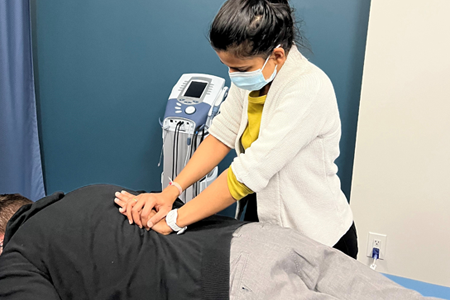
There are a variety of manual therapy techniques available to patients. These therapy techniques may include, but are not limited to:
1) Joint mobilization: Your physiotherapist uses slow, controlled movements to gently move a stiff or restricted joint through its range. This can help ease stiffness and improve how the joint moves.
2) Manual traction: Using their hands, your physiotherapist applies a gentle pulling force to create space and lightly stretch the surrounding tissues. It's most often used for the neck, but may also be applied to the back or limbs. The aim is to ease stiffness and improve comfort and movement.
3) Soft tissue massage: Your physiotherapist works on muscles and soft tissues using techniques such as sustained pressure and stretching to help reduce tension and improve comfort and movement in the affected area. This is applied as part of your physiotherapy treatment, chosen after an assessment of your symptoms, movement and functional needs — so it's guided by your specific problem rather than being a general relaxation massage.
4) Spinal manipulation: Spinal manipulation is a hands-on technique used to help improve movement in the spine and ease pain. Whether it's suitable depends on your assessment, and your physiotherapist will discuss it with you before it's used.
CONDITIONS WE TREAT
- Soft tissue injuries
- Muscle strains
- Tension headaches
- Rotator cuff injuries
- Back pain
- Knee arthritis
- Repetitive stress injuries
- Nerve impingements
- Hip replacements
- Ligament sprains
- Neck & shoulder pain
- Sciatica
- Tennis/golfer’s elbow
- Hip arthritis
- Knee replacements
- Post-surgical rehab
- Arthroscopic surgeries
- Ligament repairs
- Vertigo
- Concussions
- Temporomandibular joint (TMJ) disorders
How Manual Therapy May Help With Pain and Mobility?
If you're dealing with pain, stiffness or trouble moving after an injury, surgery or a flare-up of a long-standing problem, manual therapy may help. Our Etobicoke physiotherapists use hands-on techniques to ease discomfort, loosen stiff joints and muscles, and improve how you move day to day. To find out whether it's a good fit for you, call Waterfront Physio and Rehab or Book an Appointment Online.
Is Manual Therapy Safe?
Manual therapy is a hands-on physiotherapy approach that's carried out after your physiotherapist has assessed you. That assessment matters: manual therapy isn't right for every condition or every person, so your physiotherapist reviews your symptoms, history and how you're moving before deciding whether it's suitable and which techniques may help. Treatment is then adapted as your symptoms and movement change. It's provided by trained physiotherapists who select and adjust techniques based on what they find during your assessment.
Does Manual Therapy Hurt?
Many first-time patients worry that treatment will be painful. Manual therapy is generally gentle, but some techniques involve pressure or may cause mild, temporary discomfort, and this varies from person to person. Your physiotherapist works within your comfort and tolerance, so it's important to speak up if anything feels too painful — they can adjust or change the technique accordingly.
What to Expect During Your Appointment?
If you've never had manual therapy before, here's roughly what happens. Your physiotherapist starts by talking through your symptoms and history, then assesses how you move. Based on what they find, they'll use hands-on techniques suited to you, and may combine these with exercise, mobility work, education or movement advice as part of your overall physiotherapy.
Manual therapy is often one part of a broader plan rather than a treatment on its own. The number of sessions varies from person to person, depending on your condition, how you respond and your goals — your physiotherapist can recommend a plan after assessing you.
Book a Manual Therapy Assessment in Etobicoke
If pain, stiffness or limited movement is getting in the way of your daily activities, our Etobicoke physiotherapists can assess you and let you know whether manual therapy is a suitable part of your treatment. Book an assessment at Waterfront Physio & Rehab to get started.