
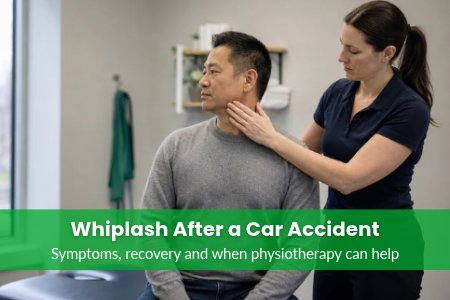
Whiplash After a Car Accident: Symptoms, Recovery and When to Start Physiotherapy
The collision on the Gardiner felt minor. You swapped insurance details and drove home feeling fine. The next morning, you couldn't check your blind spot without wincing. That is often the moment people in Etobicoke start looking into whiplash physiotherapy.
What whiplash actually is?
Whiplash describes how the injury happens, not a single diagnosis. In a collision, the head snaps backward and forward faster than the neck muscles can brace. That sudden acceleration and deceleration can strain muscles, sprain ligaments and irritate the joints of the cervical spine.
Clinicians call the resulting symptoms Whiplash-Associated Disorder (WAD), graded with the Quebec Task Force classification:
| Grade | What it means |
|---|---|
| I | Neck pain, stiffness or tenderness, with no physical signs |
| II | Neck symptoms plus physical signs such as reduced movement |
| III | Neck symptoms plus neurological signs |
| IV | Fracture or dislocation |
Only a clinical examination can place someone in a grade.
Symptoms that often show up a day or two later
Common whiplash symptoms include:
- Neck pain and stiffness
- Headache, often at the base of the skull
- Pain across the shoulders or upper back
- Difficulty turning or tilting the head
- Fatigue
- Dizziness or trouble concentrating
Symptoms often take a day or two to appear. Stress can mute pain in the moment, and strained tissues tend to stiffen over the following hours. A late start does not mean a worse injury.
When to get medical care first?
These symptoms need a doctor before any physiotherapy. Go to the emergency department, or call 911 if they are severe:
- Numbness, tingling or weakness in your arms or legs
- Loss of balance or coordination
- A severe or worsening headache
- Confusion, vomiting or any loss of consciousness
- Sharp pain in the middle of the back of the neck, or being unable to move your neck
- New problems controlling your bladder or bowels
If you also hit your head, read about concussion recovery after an impact.
How long does whiplash take to heal?
Ontario's OPTIMa guideline states plainly that most patients will recover. Speed varies. The Australian whiplash guidelines link slower recovery to high initial pain and disability, post-traumatic stress symptoms, a lot of worry about the pain, and low expectations of getting better. A previous neck injury can also play a part, so nobody can honestly predict your timeline on day one.
What helps in the first few weeks
Guidelines favour staying active over resting your neck, along with clear reassurance that the usual course is one of gradual improvement.
- Keep up your normal routine as comfortably as you can.
- Move your neck gently through comfortable ranges several times a day.
- Use heat if it eases stiffness. Our guide to choosing heat or cold for a sore neck explains when each one fits.
- Skip the soft collar unless a doctor prescribed one. The OPTIMa guideline advises against a cervical collar for recent whiplash.
How physiotherapy helps whiplash recovery
1. Your first assessment
We ask how the collision happened and go through your symptoms and history. We screen for warning signs, check neck movement and test nerve function in your arms. Then we talk about work, sleep and the activities you want back.
2. Treatment built around you
Two people in the same crash rarely need the same plan. Education comes first, then care centres on restoring comfortable movement and progressing exercise as you improve. Manual therapy or soft-tissue work may ease pain short term, but it supports active rehabilitation rather than replacing it.
Because our physiotherapists, chiropractor and registered massage therapists share one clinic, we can coordinate their care when it suits your case. Our page on physiotherapy after a car accident explains how we handle accident-related injuries.
Paying for physio after a car accident in Ontario
Ontario accident benefits are no-fault, whoever caused the crash. The usual first steps:
- Notify your auto insurer within 7 days of the accident, or as soon as you reasonably can.
- Submit the OCF-1 application within 30 days of receiving the forms from your insurer.
- Tell us it's an accident claim when you book. We submit the treatment plan to your insurer, so you don't pay us directly. See how billing works for car accident claims.
Do I need a referral? No. You can book physiotherapy in Ontario without a doctor's referral.
Talk to us about your neck
A sore neck after a collision deserves a proper look. In a free 15-minute consultation, we can talk through your symptoms, explain what an assessment involves and show you how your claim is handled.
Call us at 416-252-4855 or book online.