
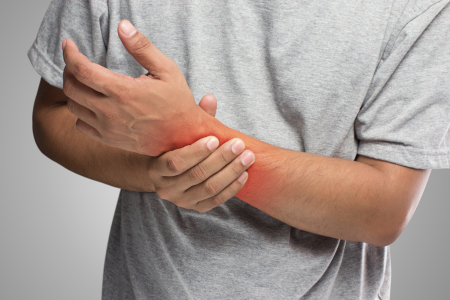
Soft Tissue Injuries: What’s Actually Happening and How to Heal Properly?
You’re halfway through a run, or maybe just reaching for something on a shelf — and suddenly, something feels wrong. Not broken, but definitely not right. That dull ache, the unexpected swelling, the tightness that won’t go away.
Soft tissue injuries don’t always announce themselves dramatically. And most people either push through too soon or rest too long without any real plan — both of which slow recovery down. At Waterfront Physio & Rehab in Etobicoke, this is something we see constantly. So let’s talk through what these injuries actually are, what helps, and when it makes sense to get professional support.
What Is a Soft Tissue Injury?
The term covers damage to muscles, tendons, ligaments, or connective tissue — basically everything that isn’t bone. Treatment depends on which tissue is involved and how badly it’s been affected.
- Strains happen when a muscle or tendon gets overstretched or partially torn. Hamstring strains in runners, shoulder strains in gym-goers — very common. You’ll usually feel pain with movement, some weakness, maybe swelling.
- Sprains involve ligament damage, usually from a sudden twist or impact. Ankle sprains are the most familiar example. Depending on severity, you might get bruising and a joint that doesn’t quite feel stable.
- Tendonitis is inflammation from repetitive overuse — tennis elbow, Achilles issues, rotator cuff irritation. It builds up slowly and needs more than just rest to fully resolve.
- Bursitis occurs when small fluid-filled sacs near joints get irritated — usually the hip, shoulder, or knee. It can mimic other conditions, which is why a proper assessment matters.
- Stress injuries develop gradually, often when training load increases too fast without enough recovery time. Without addressing the underlying cause, they tend to linger.
More serious injuries — full ligament tears, ruptured tendons — sit at the other end of the spectrum. These sometimes require surgical input, but structured physiotherapy makes a real difference regardless of the path taken.
The RICE Protocol — Helpful Early On
For the first 48–72 hours, RICE is still a solid starting point:
- Rest: Protect the injury, but don’t go completely still. Keep the rest of your body moving where you can.
- Ice: 15–20 minutes every 2–3 hours. Always wrap it — ice directly on skin causes more problems than it solves.
- Compression: A snug bandage or sleeve helps manage swelling. Loosen it if you feel tingling.
- Elevation: Limb above heart level when resting. Simple, but it genuinely helps fluid drain.
Worth knowing: Newer research suggests that gentle early movement often promotes better healing than pure rest. Knowing how much to move, when to push a little, and when to back off — that’s exactly where physiotherapy guidance becomes useful.
When Should You See a Physiotherapist?
Most people wait too long. A reasonable rule: if things aren’t clearly improving within a few days of basic self-care, get it looked at.
Consider booking in if you notice:
- Pain that’s worsening or not responding to rest and ice
- A joint that feels unstable or keeps giving way
- Significant swelling or bruising that’s spreading
- Weakness making everyday tasks harder than usual
- A recurring injury that keeps coming back in the same spot
You might also notice you’ve started compensating without realizing it — walking differently, favouring one side. That kind of pattern creates secondary problems if it goes on long enough.
Not sure if your injury warrants a visit? We offer a free 15-minute consultation so you can talk it through before committing to anything. Call us at 416-252-4855 or book now online.
What Physiotherapy for Soft Tissue Injuries Actually Looks Like?
Effective rehab is active, not passive. At Waterfront Physio & Rehab, treatment is tailored to your injury, your lifestyle, and your goals. Depending on the situation, that might include:
- Manual Therapy to restore mobility
- Progressive loading exercises that build gradually as tissue heals
- Stability training to restore coordination after sprains
- A structured return-to-activity plan
Direct billing is available through most major insurers.
A Few Recovery Habits Worth Knowing
- Don’t confuse feeling better with being healed. Soft tissues often feel okay before they’ve fully regained strength — this is why re-injury rates are high when people return to activity too soon.
- Sleep is where most tissue repair actually happens. Poor sleep slows recovery. There’s no workaround for that one.
- Gradual loading builds resilience. Once your physio gives the green light, easing back into activity progressively makes the tissue stronger over time. Avoidance doesn’t.
Ready to Get Moving Again?
Soft tissue injuries are common, but “common” doesn’t mean you should wait it out without support. The right guidance early on means faster recovery and a lower chance of the same thing coming back.
Waterfront Physio & Rehab serves Etobicoke and the surrounding Toronto area. Our licensed physiotherapists build personalized treatment plans focused on real, functional recovery.
Call 416-252-4855 or book now online — and if you’re still unsure, start with our free 15-minute consultation.