
Non-Surgical Sciatica Treatment: Why Spinal Decompression Is Gaining Popularity?
If you have ever experienced that sharp, electric-shock sensation traveling from your lower back down through your leg, you know that sciatica is more than just a nuisance. It can be debilitating.
For many Etobicoke residents, the immediate fear upon receiving a sciatica diagnosis is the prospect of surgery. The idea of invasive procedures, long recovery times, and heavy reliance on painkillers is daunting.
However, the landscape of rehabilitation is shifting. Patients are increasingly seeking safer, non-invasive alternatives that address the root cause of the pain rather than just masking symptoms. This is why spinal decompression therapy is rapidly becoming a preferred choice for long-term relief.
At Waterfront Physio & Rehab, we believe in educating our patients on their options. Here is a closer look at how this therapy works and why it might be the solution you’ve been looking for.
Understanding the Mechanics of Sciatica
To understand why spinal decompression works, we first have to look at what is causing the pain.
The sciatic nerve is the longest nerve in your body. While the pain is often felt in the glutes, hamstrings, or calves, the "problem" usually originates in the lumbar spine (lower back). In many cases, a herniated or bulging disc is pressing against the nerve root.
Think of your spinal discs as shock absorbers between your vertebrae. Over time, due to age, posture, or injury, these discs can compress. When they flatten or bulge, they pinch the nerve, causing inflammation and pain.
How Spinal Decompression Therapy Works?
Unlike general traction, which stretches the spine generally, modern spinal decompression therapy is highly specific.
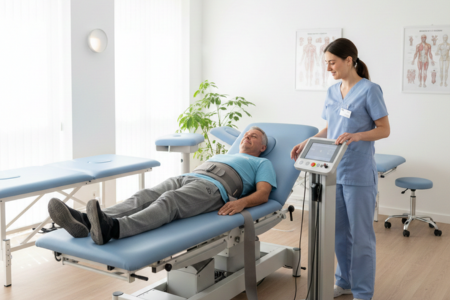
Using specialized, computer-controlled tables, the therapy applies a gentle, distraction force to the specific spinal segment causing your pain. This process creates a "vacuum effect" (negative intra-discal pressure) inside the targeted disc.
This vacuum effect achieves two vital goals:
- Retraction: It helps pull the bulging or herniated disc material back into its proper place, taking pressure off the sensitive nerve.
- Nutrient Exchange: It promotes the flow of water, oxygen, and nutrient-rich fluids into the disc, which facilitates the body’s natural healing process.
Why is This Approach Gaining Popularity?
As we move toward more conservative healthcare models, patients and providers alike are prioritizing treatments that minimize risk. Here is why spinal decompression is seeing a surge in interest:
1. It is Non-Invasive and Drug-Free
The opioid crisis and the risks associated with spinal surgery have made many patients wary. Spinal decompression is a mechanical solution to a mechanical problem. It does not require anesthesia, needles, or prescriptions.
2. No Downtime
Surgery often requires weeks or months of bed rest and rehabilitation. With decompression therapy, most patients can continue their daily routines (with some activity modifications) immediately after a session. For busy professionals living near Lakeshore Etobicoke, the ability to receive treatment and return to work is a major advantage.
3. Precision Technology
Modern decompression tables use sensors to monitor your muscle resistance. If your muscles tighten up (guarding), the machine adjusts the tension automatically. This ensures the treatment remains comfortable and effective, unlike older traction methods that could sometimes trigger muscle spasms.
Is Spinal Decompression a Standalone Cure?
While spinal decompression is powerful, sustainable relief usually requires a comprehensive approach. At Waterfront Physio & Rehab, we view decompression as a tool that opens the window for healing—but physiotherapy is what keeps that window open.
Once the pressure is relieved and the pain subsides, it is critical to strengthen the core and stabilize muscles around the spine to prevent the injury from recurring.
An effective treatment plan usually involves:
- Decompression sessions to relieve nerve pressure.
- Manual therapy to improve joint mobility.
- Corrective exercises prescribed by a licensed physiotherapist to build strength and improve posture.
Who is a Candidate?
Spinal decompression is highly effective for many, but it isn't for everyone. It is commonly recommended for patients suffering from:
- Herniated or bulging discs
- Sciatica (leg pain)
- Degenerative disc disease
- Posterior facet syndrome
- General lower back pain
However, conditions like severe osteoporosis, spinal instability, or recent spinal fractures may require different approaches. This is why a thorough assessment is always the first step.
Local Care at Waterfront Physio & Rehab
Finding the right clinic is just as important as finding the right treatment. You need a team that understands your medical history and monitors your progress closely.
Located conveniently near the water in Etobicoke, our clinic offers a welcoming, professional environment where your recovery is the priority. We focus on evidence-based care, ensuring that if you undergo spinal decompression, it is part of a tailored plan designed specifically for your body.
If you are unsure if this treatment is right for you, we invite you to speak with us. We offer a free 15-minute Q&A with our therapists to discuss your symptoms and see if you are a candidate for care.
Take the Next Step Toward Pain-Free Living
You do not have to live with the constant limitations of sciatica, and surgery is not your only option. By combining advanced technology with expert physiotherapy, we help our patients get back to walking the Lakeshore, playing with their kids, and living life without the fear of the next flare-up.
Ready to explore how non-surgical spinal decompression can help you?
Call us today: 416-252-4855 or book now online.